 AI VORTEX

Two firms can buy the same generation of AI models and give their clients very different experiences.
One might use the extra capacity to produce more documents. Another might use it to make sure a client never has to send a third email asking where things stand. Both can say they use AI. Only one has improved that particular interaction.
That is a more useful starting point for a firm's AI strategy than the next model announcement. Better tools can bring a postponed comparison, a useful preparation pack or a small recurring service within reach. They cannot decide which of those things deserves to become part of the firm's offer.
The competitive question is what the client can now do with less effort, and what the firm must preserve to make that improvement dependable.
What a cheaper model does not tell you
Token price is one input into the cost of a job. A more capable model may cost more per token and still be cheaper to use if it needs fewer attempts and leaves less work to correct. A low-priced model can become expensive when a senior reviewer has to repair its output.
OpenAI's investment guidance recommends evaluating the cost of an accepted outcome, including attempts and human review. Anthropic's Opus 5.5 announcement also distinguishes token rates from the amount of work required to complete a task. These are useful evaluation principles; vendor announcements do not establish the economics of a particular firm's workload.12
A team could complete the same work for less, produce better work for the same spend, or spend more to do something previously impractical. Each calls for a different evaluation. Setup, review and upkeep still count. A software contract may not get cheaper, and payroll may not change.
Capacity is not automatically margin. And neither is automatically a better client experience.
There can be a worthwhile gain without an immediate cash saving. The discipline is to name the gain accurately and check where it goes.
Study the service being sold
Moritz offers one example of a firm organizing around AI. Its Y Combinator profile describes AI-prepared work, lawyer review, upfront fees and rapid turnaround. The client submits a matter; the firm takes responsibility for turning it into legal work.3
The firm's engineering role description makes the operating connection explicit. Lawyers and engineers work alongside each other. A problem with a redline feeds back into what gets built. Intake turns a client's request into structured work, while client-facing systems handle communication and delivery.4
The inference for an incumbent is still useful: a better production system can change the service a client receives without requiring that client to learn a new tool. The firm absorbs the work of translating technical progress into something usable.
That connection deserves attention even while the economics and long-term outcomes remain open questions.
Keep the judgment.
Redesign the delivery.
A hybrid firm, as used here, keeps professional judgment and client relationships at the center while deliberately redesigning repeatable delivery work. That includes intake, context, updates and follow-through.
An established firm already has assets worth protecting: experienced people, trusted relationships and knowledge of a practice. It can improve the repeatable work around those assets without adopting a venture-backed firm's entire business model.
Decide which work needs a dependable process and where a person must interpret, challenge, decide or reassure. The boundary follows the matter and its risks; it cannot be set once for every kind of work.

A firm might retain bespoke pricing for complex advice while improving intake. It might introduce reliable updates before offering any new product. A narrowly scoped recurring service could follow once the team understands the effort, exceptions and maintenance involved.
The order matters: understand the work, define the boundaries, test a change, then decide what the results justify promising or pricing.
Review must remain substantive. Junior people need to understand how conclusions were reached, and senior reviewers need enough context to challenge them. A ceremonial approval at the end can buy speed at the expense of the firm's future ability to judge the work.
Count the client's work, too
Sound advice can still be difficult to use. It may arrive too late for a meeting, require the recipient to rewrite it for colleagues, or leave the next step unclear.
Finding the latest version, rebuilding context, collecting missing information, chasing an update and explaining what happens next are all part of delivery. When a firm leaves that work to its client, an internal efficiency measure can miss it entirely.
Before calling a process more efficient, ask whose time you stopped counting.
At a Parker Poe workshop on September 10, 2026, clients and attorneys built AI assistants together. The firm reported that approximately 90% of participants chose executive legal briefings over company research or risk disclosure updates. They worked on adapting commercial-dispute updates for different executives, including the business implications and decisions required.5
A workshop does not demonstrate sustained efficiency or financial returns. It does show recipients helping choose the delivery problem worth working on. The task was to make legal information easier to act on.
05 / From the author's workbench
When capacity creates something new
On September 24, I was comparing two years of ESPN's NBA rankings. While working on other projects, I directed my AI agents to turn the comparison into a public tool. That became RANKSHIFT. I still had to make decisions, check the work and fix things.
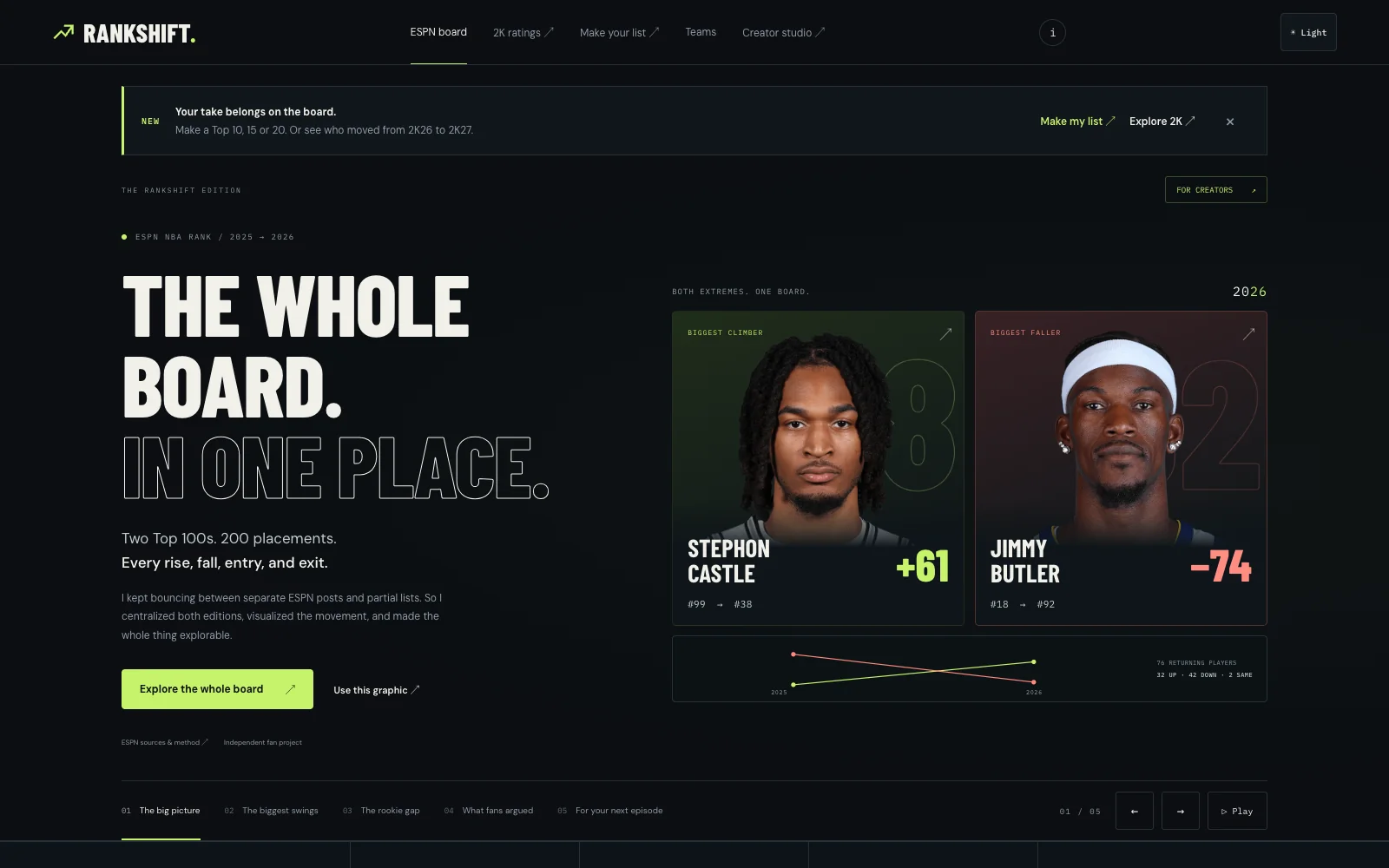
The r/nba discussion included praise, readability feedback and requests for other comparisons. An answer that might have stayed in a private chat became something other people could use.6
There is no honest “hours saved” comparison against an earlier version of this service. There was no earlier service. The gain was additional work becoming feasible with the resources I had.
A sports tool does not prove a legal workflow is safe. It does explain why new capacity is worth examining separately from cost reduction. A firm's version might be a preparation pack, a useful comparison or a recurring check it previously lacked the room to offer.
Test a complete interaction
Consider a recurring matter update sent to a general counsel who then has to brief the CFO. This is an illustrative test, not a reported client result.
Keep the reviewed analysis. Add a short decision brief that identifies what changed, what remains uncertain, what decision is required and when. Link back to the underlying material. Assign someone to check that the shorter version preserves qualifications that affect the meaning.
Then compare the whole interaction. Can the general counsel use the brief with less rewriting? Are there fewer clarification loops? Does the additional legal review cost more time than the team saves preparing it? Are important issues surfaced or flattened?
That is more informative than timing how quickly a model generates a summary.
Continuity can be tested next: agree when the client should hear from the team, maintain an accurate record of outstanding work and flag a promised update at risk. “Nothing material has changed” can be useful when it is grounded in the actual matter.
Some steps may require AI. Others may work better with a reminder, a shared record or a clearer assignment. The client benefit is less uncertainty about the work they depend on. The team needs a process it can sustain.
Better models are available to the next firm, too
A workflow used in practice can accumulate knowledge a model subscription does not provide: the questions clients ask, the exceptions that recur, the explanations that help and the promises the team can reliably keep.
That knowledge can improve the next version and the next person's work. A new model may speed up part of the process without forcing the firm to rediscover what its clients needed.
Some gains should remain internal: time to train, better checking, room to think or a sustainable workload. A client may never see the error an additional review prevented. The important decision is where the gain belongs, followed by evidence that it reached that destination.
Established firms can make their expertise easier to access, understand and act on while protecting the relationships and judgment that give it value.
Your next competitor may not offer cheaper advice. It may stop making the client do so much of the work around it.