
 By
By 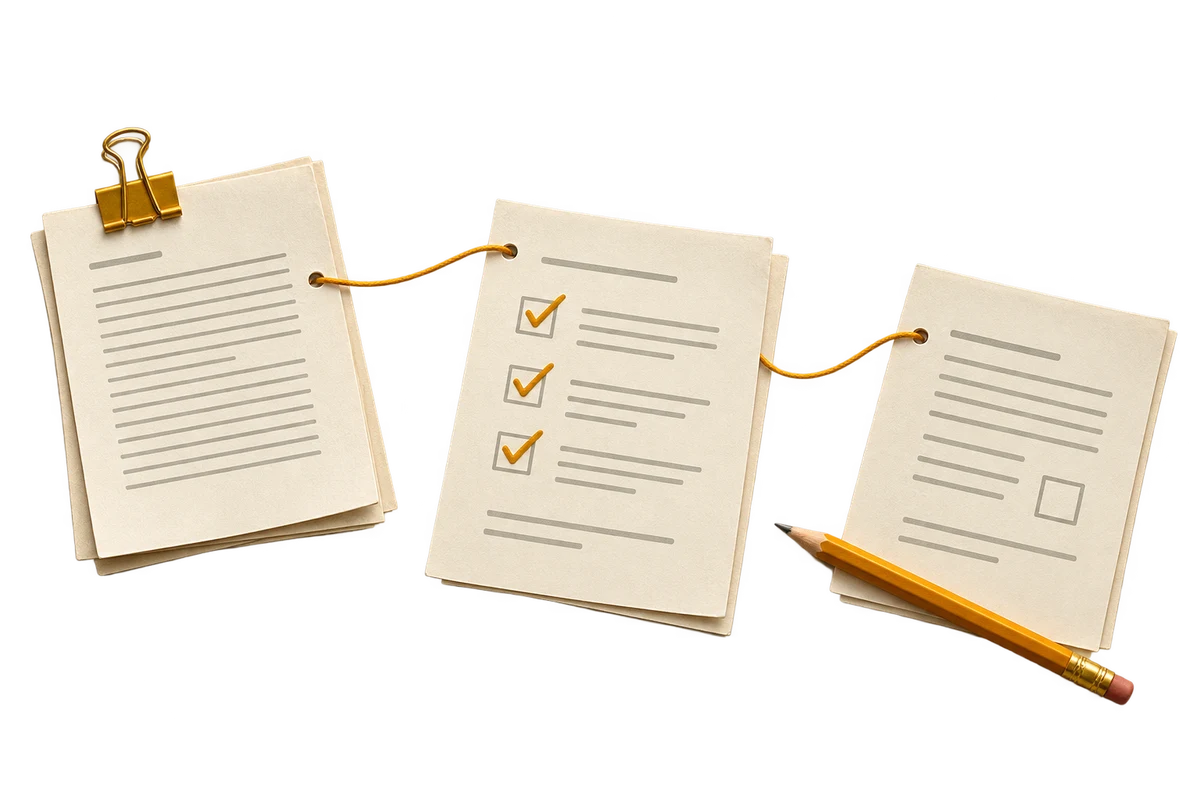
Map an assignment you can actually describe
A useful task map records the work, possible AI assistance, human responsibility and evidence of review. Start with one bounded assignment. Use the map to choose a practice task or discuss a workflow, not to calculate whether a job is safe.
“Legal research” is too broad for a first map. “Prepare a source-linked summary from an approved set of public materials for a named reviewer” is a workable starting point. You can say what goes in, what comes out and who decides whether the result is usable.
O*NET’s U.S. paralegal profile lists research, document preparation and records-related tasks among the work of the occupation. Use such descriptions to find vocabulary, then check the actual assignment with the employer or supervisor. An occupation profile does not tell you which tool your organization permits or what authority you have.
Worked example: a research handoff
| Task | Possible assistance | Human responsibility | Evidence to keep |
|---|---|---|---|
| Find candidate sources | Suggest search directions within approved tools | Select the scope; verify authority, date and relevance | Search notes and rejected candidates |
| Prepare a first summary | Draft from the permitted source set | Check each proposition against its source; record corrections | Linked source passages and correction log |
| Prepare the handoff | Organize the reviewed material | Identify unresolved questions and the person deciding them | Reviewer, open questions and acceptance notes |
The example is an editorial exercise using a hypothetical assignment. It reports no client work, time saving or tool evaluation. The proposed assistance is conditional on permission and checking; none of the rows grants an AI system authority to accept legal work.
Notice the final column. It gives another person something to inspect. If a row ends only with “AI produced a summary,” the map is missing the checking and handoff that make the output useful.
Build your own task map
Use public or synthetic material. Do not enter client names, case facts or confidential information. Your entries stay in this page’s memory and are cleared when you reload. Download a copy before leaving.
Agree what a reviewer needs to see
The ABA’s explanation of Formal Opinion 512 identifies competence, confidentiality and communication among the ethical duties lawyers must consider when using generative AI. That is a U.S. professional reference, not a universal permission rule. Check the applicable jurisdiction, institution and employer requirements for your assignment.
For this exercise, agree the source set, the checking standard and the person resolving uncertainty before you begin. If the reviewer is unavailable, record that constraint rather than treating an unchecked draft as finished.
- Inputs: what material is permitted, current and sufficient?
- Quality: what would make the output unacceptable?
- Exceptions: what stops the workflow or requires escalation?
- Acceptance: who makes the final decision, and what record do they need?
Keep a learning opportunity inside the task
A map can help a student or junior colleague choose what to practice. Pick one row and explain the reasoning before comparing it with an assisted output. Record a correction and why it mattered. Ask a reviewer for feedback you can use on the next attempt.
This is a proposed practice method, not a validated assessment. If you need a bounded exercise, use the review lab or the work-sample guide. Follow the rules for your course or workplace; tool access does not settle permission.
Choose one change and check its effect
Your next step might be to narrow the task, improve an input, protect review time or practice a missing skill. Choose one, name the evidence you will collect and set a point to review what happened.
For a team, compare the incoming work with available review capacity. For a career decision, compare the map with the actual responsibilities in a role. For the economic context behind this exercise, read our Anthropic scenarios brief.
A completed worksheet is useful when it makes an unresolved decision visible. It is not a credential, a productivity benchmark or a staffing recommendation.
Questions and answers
Does the worksheet calculate my risk of replacement?
No. It records tasks, possible assistance, human responsibility and evidence. It produces no employment-risk score or prediction.
Are my entries saved or sent to AI Vortex?
Worksheet entries stay in page memory. They are not sent to AI Vortex or saved in browser storage. Reloading clears them; download your map to keep a local copy.
Can I use this with client material?
Use public or synthetic descriptions here. Follow the applicable professional, employer and institutional requirements before using AI with any real work.
Sources and scope
- O*NET: Paralegals and Legal Assistants. Occupation 23-2011.00, updated 2026; checked September 9, 2026.
- ABA: Ethics guidance on lawyers’ use of AI. July 2024; explanation of Formal Opinion 512; checked September 9, 2026.
U.S. sources inform this page. Our legal-work questions and exercises are editorial interpretations, not findings endorsed by the source authors. Local responsibilities and permissions differ.
Prepared with AI-assisted research and editorial verification for AI Vortex. Illustrations are conceptual. The worked example is synthetic. The worksheet is a planning aid, not a validated hiring test or employment forecast.